

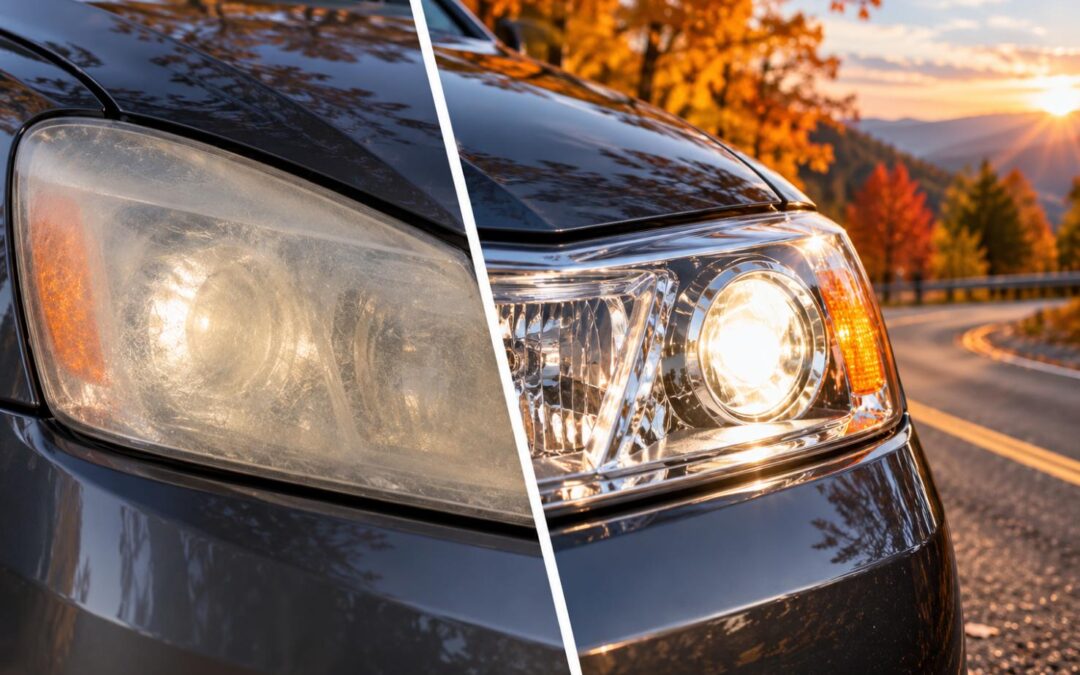
Cloudy headlights can become especially noticeable as fall days grow shorter around Wood Dale, IL. Evening commutes, wet pavement, early sunsets, and winter weather can all make clear forward visibility more valuable, whether you are driving along Irving Park Road, Route 83, or local streets near your neighborhood.
Headlight restoration removes or reduces the hazy, yellowed surface layer that can develop on plastic headlight lenses. Clearer lenses allow your headlights to perform closer to their intended condition and can improve the appearance of your vehicle. Restoration can be a practical option when the lens surface is cloudy but the headlight assembly itself is still in serviceable condition.
What Wood Dale Drivers Should Know
-
Cloudiness on modern headlight lenses commonly develops as the plastic surface ages and its protective coating deteriorates.
-
Fall and winter driving around DuPage County can involve darkness, rain, snow, road spray, and dirty lenses, making headlight condition particularly noticeable.
-
Yellowing, haze, and a rough or dull lens surface are common signs that restoration may be worth considering.
-
Drivers traveling between Wood Dale, Itasca, Bensenville, and Addison may encounter a mix of busy roads and darker local streets where dependable vehicle lighting matters.
-
Restoration and headlight replacement are different solutions, so the condition of the lens and assembly should guide the choice.
Why Does Headlight Clarity Matter in Wood Dale?
Headlight clarity matters in Wood Dale because drivers regularly travel in darkness and changing Midwestern weather, and a hazy lens can interfere with the light produced by the headlight assembly. Clear lenses are particularly useful during evening driving, wet weather, and the shorter daylight hours of fall and winter.
Local drivers frequently use roads such as Irving Park Road, Wood Dale Road, and Route 83 while traveling throughout the western suburbs. Conditions can change quickly during the colder months. Rain can create reflective pavement, while snow, slush, salt residue, and road grime can coat the front of a vehicle.
At VIP Express Car Wash, we understand that vehicle care is about more than appearance. Headlight clarity is one part of keeping the exterior of your vehicle clean, visible, and ready for seasonal driving conditions.
What Causes Cloudy Headlights in This Area?
Cloudy headlights typically develop when aging, sunlight exposure, weather, and surface contamination gradually affect the exterior of a plastic lens. Around northeastern Illinois, vehicles experience hot summer sun as well as freezing temperatures, precipitation, road salt, dirt, and repeated seasonal changes.
Modern headlight assemblies commonly use plastic lenses rather than glass. Over time, the exterior protective layer can degrade, leaving the underlying surface looking dull, yellow, or cloudy.
Regular exposure to outdoor conditions can accelerate visible wear. Vehicles parked outside around Wood Dale may experience repeated sunlight and temperature changes, while winter driving adds salt spray, slush, and grime to the equation.
How Do Cloudy Headlights Affect Local Driving?
Cloudy headlights can reduce the clarity of the light leaving the headlight assembly, which can make nighttime visibility less effective than it would be with a clear lens. The difference becomes particularly relevant when drivers are already dealing with darkness, precipitation, dirty roads, or glare.
This can matter during an evening commute from O’Hare-area workplaces, a nighttime trip through Bensenville, or winter driving across DuPage County. Drivers need to see lane markings, pedestrians, turns, road debris, and other vehicles as clearly as conditions allow.
Cloudy headlights can also make an otherwise clean vehicle look older and less maintained.
What Are the Warning Signs That Your Headlights Need Attention?
Headlights may need cleaning, restoration, or further inspection when the lenses show visible deterioration or nighttime illumination seems different than expected. Drivers should look at both headlights in daylight and then pay attention to their performance after dark.
Common warning signs include:
-
A yellow or amber tint across the lens
-
White or milky-looking haze
-
A dull surface instead of clear plastic
-
Uneven cloudiness between the two headlights
-
Scratched or rough-looking exterior surfaces
-
Headlights that appear noticeably less clear than they once did
-
A clean lens that still looks cloudy after ordinary washing
Moisture inside the assembly, damaged housings, electrical problems, or failed bulbs point to a different issue and may require repair rather than surface restoration.
When Should You Consider Professional Headlight Restoration?
Professional headlight restoration is worth considering when ordinary exterior cleaning does not remove the haze and the deterioration appears to be on the lens surface. Restoration is intended to address surface clarity, not broken components, internal condensation, wiring problems, or other mechanical or electrical faults.
A quick visual check can help. Wash away loose dirt and road film first. If the lens remains yellowed or cloudy afterward, the issue may be oxidation or deterioration rather than simple contamination.
For drivers preparing for fall and winter travel around Wood Dale, checking the headlights before the darkest part of the year is a sensible addition to seasonal vehicle care.
How Can You Help Keep Headlights Clear?
Keeping headlights clean and addressing surface deterioration early can help maintain their appearance and condition. Seasonal washing is particularly useful in the Chicago suburbs because road film, insects, dirt, salt, and winter grime continually collect on the front of a vehicle.
Wash the front end regularly during periods of heavy road salt and slush. Avoid harsh household abrasives that were not designed for automotive surfaces. Also inspect your headlights periodically in daylight so gradual yellowing is easier to notice.
DIY restoration kits are available, but results can depend heavily on preparation and technique. Aggressive sanding or inappropriate products can damage the lens surface, so drivers should follow product directions carefully or choose professional restoration.
What Results Can You Expect From Headlight Restoration?
Headlight restoration can improve the clarity and appearance of lenses when the problem is primarily surface haze, yellowing, or oxidation. The exact result depends on the age of the lens, severity of deterioration, previous treatments, scratches, and whether damage extends beyond the exterior surface.
Restoration cannot correct every headlight problem. A cracked assembly, significant internal damage, moisture intrusion, or electrical fault may require another solution.
Setting realistic expectations helps Wood Dale drivers choose between restoration and replacement rather than treating every cloudy headlight the same way.
What Common Headlight Care Mistakes Should Drivers Avoid?
The biggest headlight care mistakes involve treating every form of cloudiness as surface dirt or using aggressive DIY methods without considering the actual condition of the lens. The better approach is to identify whether you are dealing with grime, exterior deterioration, or damage inside the assembly.
Mistake: Assuming a normal car wash will remove oxidation.
Consequence: The lens may remain hazy even after the vehicle is clean.
Better approach: Consider restoration when clean lenses still show surface deterioration.
Mistake: Using aggressive household abrasives.
Consequence: Improper products can scratch or alter the lens surface.
Better approach: Use products and processes intended for automotive headlight lenses.
Mistake: Ignoring moisture inside the headlight.
Consequence: Exterior restoration will not address an internal problem.
Better approach: Have the assembly evaluated when condensation or water is visible inside it.
What Is a Common Local Headlight Scenario?
A common local scenario is a vehicle that looks fine during daylight but reveals noticeably hazy headlights as the owner prepares for an evening drive. After a summer of sunlight and another season of normal road exposure, the cloudy surface becomes more obvious as fall brings earlier darkness.
The owner may first assume the headlights are simply dirty. Washing removes surface grime, but the yellow or milky appearance remains. That is a useful sign that the lens itself may need additional attention.
This is not a specific customer case study, but it illustrates a common situation area drivers can watch for.
Which Vehicle Care Services Can Help?
Exterior cleaning and headlight restoration address different layers of vehicle care, and they can complement each other when a vehicle has both road grime and deteriorated lenses. Washing removes surface contamination, while restoration addresses suitable lens deterioration that ordinary cleaning cannot remove.
At our Wood Dale location, drivers can explore vehicle care options based on the condition of their car rather than assuming every cosmetic issue requires replacement.
Should You Restore or Replace Cloudy Headlights?
Restoration generally makes sense when surface deterioration is responsible for the cloudy appearance, while replacement or repair may be necessary when the assembly has physical, internal, or electrical damage. The condition of the headlight should determine which route makes sense.
A restoration approach can be less involved than replacing an otherwise functional assembly. Replacement becomes more relevant when there are cracks, broken components, severe internal deterioration, or other problems that restoration cannot address.
Where Do We Serve Local Drivers?
We serve drivers in Wood Dale and the surrounding western suburban area. Nearby communities such as Itasca, Bensenville, Addison, and Elk Grove Village are part of the same local driving environment, where seasonal road grime and changing Illinois weather make routine exterior vehicle care useful throughout the year.
What Can Happen If You Ignore Cloudy Headlights?
Ignoring cloudy headlights allows surface deterioration to remain while drivers continue into seasons with longer periods of darkness and challenging weather. The practical concern is not simply appearance. A compromised lens may prevent the headlight assembly from delivering light as clearly as it could through a well-maintained lens.
Fall is a convenient time to inspect your lights before winter brings snow, slush, salt spray, and frequent nighttime driving around DuPage County.
Frequently Asked Questions About Headlight Restoration
Does headlight restoration help with nighttime driving in Wood Dale?
Yes, restoration can help when surface haze or yellowing is interfering with light passing through the lens. Results depend on the condition of the headlight. With shorter daylight hours during the colder months in northern Illinois, clear lenses are especially worth checking before regular evening or nighttime travel.
Why do headlights become yellow and cloudy in Illinois?
Plastic headlight lenses can deteriorate after long-term exposure to sunlight, temperature changes, weather, and normal road conditions. Illinois vehicles also encounter seasonal contaminants such as salt spray, slush, dirt, and road film. Some apparent cloudiness is removable grime, while persistent yellowing after cleaning may indicate surface deterioration.
Can a car wash remove cloudy headlights?
A car wash can remove dirt, salt, insects, and road film, but it cannot necessarily remove deterioration in the plastic lens itself. If your headlights remain hazy after the vehicle has been thoroughly cleaned, restoration may be a more appropriate next step than repeated washing.
When should Wood Dale drivers check their headlights?
Fall is a practical time for Wood Dale drivers to inspect their headlights because daylight hours are decreasing and winter conditions are approaching. Checking them after washing the vehicle makes haze easier to distinguish from ordinary grime. Drivers should also inspect lenses whenever nighttime visibility seems different than expected.
Is every cloudy headlight suitable for restoration?
No. Restoration is primarily intended for suitable surface deterioration. Cracks, internal moisture, damaged housings, failed bulbs, electrical issues, or significant internal deterioration may require repair or replacement instead. An inspection of the headlight’s condition can help determine which approach is appropriate.
Is headlight restoration useful before a DuPage County winter?
It can be. Winter around DuPage County brings longer periods of darkness along with snow, slush, road salt, and dirty pavement. Restoring suitable cloudy lenses before winter can improve lens clarity while routine washing afterward helps remove the seasonal grime that collects on headlights.
Can I restore headlights myself?
Yes, DIY restoration products are available, but careful preparation and correct technique matter. Some processes involve abrasives or sanding, and improper use can affect the lens surface. Drivers who are uncomfortable working on automotive lenses may prefer professional restoration rather than experimenting with household products.
How do I know whether my headlights are dirty or oxidized?
Clean the headlights first and inspect them again in daylight. If dirt and road film disappear but a milky, yellow, rough, or dull appearance remains, the lens surface may be deteriorated. Persistent haze after cleaning is a better reason to consider restoration than cloudiness caused solely by winter grime.
Get Clearer Headlights for Seasonal Driving in Wood Dale
Clear headlights support better vehicle appearance and help your lighting system perform without unnecessary obstruction from a deteriorated lens. We can help you determine whether restoration fits the condition of your headlights and your seasonal vehicle care needs.
Recent Comments